
Augusta Parole and Probation
Parole and probation can both place a person under VADOC Community Corrections, but they begin in different ways. Parole is conditional release from a parole-eligible state sentence. The Virginia Parole Board makes the grant or denial decision, VADOC plans and processes the physical release, and a district office then supervises the person. Probation is ordered by a court. It may follow a jail or prison term, but it can also begin without a prison stay. A probation record alone therefore does not prove that anyone was released from prison.
Augusta County supervision is not the same as custody. A person listed at District 12 is in the community under active rules unless another record shows a new arrest or hold. A person listed at an institution remains confined. The distinction matters because the same VADOC locator covers institutions, regional-jail prisoners under state authority, parolees, probationers, and some community programs.
| Point | Parole | Probation |
|---|---|---|
| How it begins | Conditional release from an eligible state sentence after Board action | Court order, with or without prior confinement |
| Decision source | Virginia Parole Board | Sentencing court |
| Field supervision | VADOC Community Corrections | VADOC Community Corrections or the applicable local service path |
| What proves release | Actual VADOC release record and signed parole conditions | Probation status does not by itself prove a prison release |
| How it ends | Discharge, expiration, or Board/court action | Completion or discharge under the controlling order |
Check Augusta Post-Release Supervision
Begin with the official VADOC Inmate and Supervisee Locator. Search with the seven-digit DOC ID when known. Otherwise, enter at least the first three letters of the first name and the full last name, then use age, gender, race, or location filters to separate similar records. Copy the displayed status and location exactly. VADOC updates the locator daily, so a new movement may need direct confirmation.
- Match the person by DOC ID or several identity fields, not by a common name alone.
- Read status, location, and date as separate facts. A district is not a prison.
- Call Staunton District 12 to confirm that it is the assigned office and ask for releasable start or end dates.
- Check the sentencing court when probation came from an Augusta order.
- For parole, compare the Board decision with VADOC’s later actual release record.
- Request written status information if the locator is blank, old, or unclear.
The full county release-record path is explained on the Augusta County released inmates search. That record can establish the earlier exit from physical custody, while the supervision record establishes what followed.
Augusta Supervision at District 12
Augusta-area field supervision routes through VADOC Staunton Probation and Parole, District 12. The office is at 134 Rowe Road, Staunton, VA 24401, and its phone is 540-332-7780. The directory identified Joshua Lutz as district chief on the research date. Because one directory view carried inconsistent text about areas served, confirm the particular assignment by phone instead of relying on that stray description.
134 Rowe Road
Staunton, VA 24401
540-332-7780
VADOC facilities and offices directory
The official directory is useful because a district result answers a narrow question: the person is shown under community supervision rather than in a VADOC institution. It does not reveal every condition or prove the exact day physical custody ended. Ask for the assigned office, current releasable status, and relevant supervision dates with the person’s full identifiers.
The official District 12 listing is shown in the captured source below.
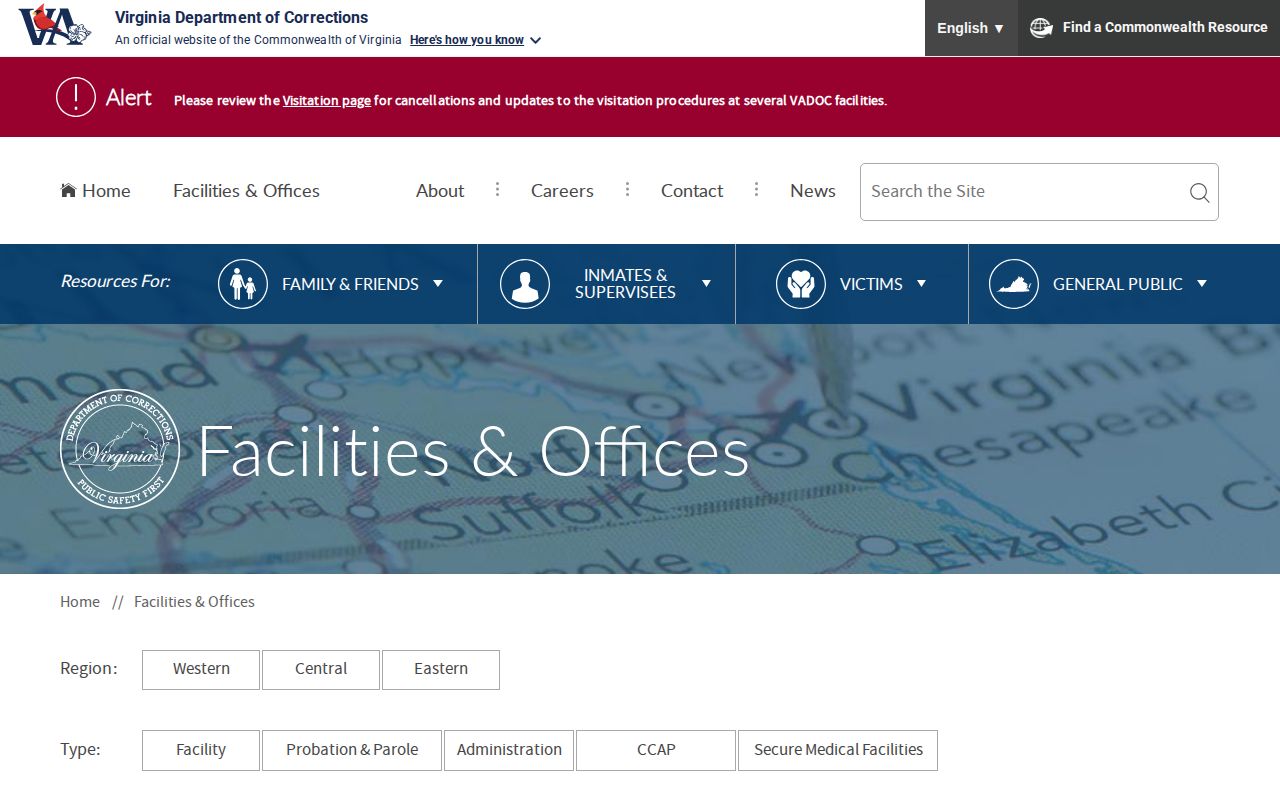
The listing confirms the local office route, but direct contact remains the sound step for a named assignment.
Note: An office listing confirms the agency route, not a person’s current compliance or full supervision history.
Augusta Parole Decisions and Dates
The Virginia Parole Board makes release decisions for sentences that remain parole eligible. Ordinary discretionary parole was abolished for most felonies committed on or after January 1, 1995, but Virginia law retains exceptions. Sections 53.1-151 and 53.1-165.1 contain eligibility rules that vary by commitment history, offense date, age at offense, sentence type, and later statutory changes. A person should not be labeled eligible or ineligible from the conviction date alone.
The Board’s public meetings page has a rolling date, agenda, webcast link, and past minutes. Its dates are irregular, not a fixed weekly inmate calendar. Monthly decision reports appear in the parole reports archive. Search the correct month’s PDF by full name or DOC ID and read the action and reason as printed.
A “Grant” is an important decision, but it is not physical release. VADOC generally sets and processes the later release date after notice, completes planning, addresses any detainer, and provides conditions for signature. A “Not Grant” decision likewise does not state that confinement can never end. Another review, sentence completion, or other lawful path may follow.
The captured Parole Board meeting source illustrates why the live calendar must be checked rather than assuming a cadence.

The calendar is a decision-stage source. The later VADOC release and District 12 records establish actual release and supervision.
Augusta Supervision Violations
Conditions are rules written into a parole or probation order. They may require reporting, travel approval, lawful conduct, or participation in services selected for the case. The signed Conditions of Parole or Conditions of Probation control. A public summary cannot replace that document, and one person’s terms should not be inferred from another person’s record.
An absconder is a supervisee alleged to have stopped reporting or otherwise left supervision without authorization. A violation allegation or warrant may lead to arrest and a return to custody, yet it does not erase the earlier lawful release. VADOC’s Most Wanted page is only a limited fugitive channel. Absence there proves neither compliance nor the absence of a warrant. Confirm a warrant with the responsible law-enforcement agency or court.
Notification systems also have narrow roles. Virginia Jail VINE covers custody events at local and regional jails such as MRRJ. VADOC VINE is a separate channel administered by Victim Services for eligible victims, and enrollment does not automatically carry over after a state transfer. The Virginia registry’s Track Offender alert is a third system for address changes by people who have a legal duty to register. None is a complete supervision or warrant database.
- Parole
- Conditional community release from a parole-eligible state sentence.
- Probation
- Court-ordered community supervision that may follow confinement or replace it.
- Absconder
- A person alleged to have stopped reporting or left supervision without approval.
- Detainer
- A hold that can send a person to another custodian instead of the community.
- Discharge
- The formal end of custody or supervision under the controlling record.
Note: A supervision violation changes current status, but it does not rewrite the date of the prior release event.
Augusta Reentry After Release
MRRJ and Augusta County have a local service layer that is separate from supervision lookup. MRRJ lists identification-document help and different reentry workshops for Staunton, Waynesboro, and Augusta participants and for the Rockingham and Harrisonburg group. These programs can help prepare for transition, but program participation is not proof of parole, probation, discharge, or current location.
Augusta’s Pathways program connects people referred by justice partners with local services. The county directs a participant to the number on the referral card. It is not an open inmate search or a route for obtaining supervision records. District 12’s resource directory separately lists the Central Shenandoah Valley Re-entry Council and local health, transit, counseling, food, and identification resources.
Augusta Release Property and ID
Release logistics depend on the custodian. MRRJ instructs a person leaving the jail to report account or property discrepancies before signing release forms, provide a forwarding address, and contact the medical department about medication held by the jail. While a person remains confined, approved property can be given to a named third party only after written authorization and arrangements with Intake. Pickup is available on Wednesday or Friday from 8:00 a.m. to 4:00 p.m.
VADOC uses a separate state-prison process. It returns property, provides applicable release and conditions documents, and may supply medication or clothing under its rules. Those VADOC practices cannot be treated as MRRJ rules. Keep the signed agency forms because they help distinguish release from a transfer and preserve the terms that apply at the start of supervision.
Confirm Augusta Supervision Discharge
Physical release and supervision discharge are separate events. A person can leave MRRJ or a VADOC prison and remain on parole or probation for years. When the supervision term ends, obtain the discharge or status record from the agency that controlled it. A blank public locator may be consistent with full discharge, but it cannot prove the date.
For an inactive VADOC record, request the existing correctional-status and supervision start or end information through VADOC’s records channel. Former inmates and supervisees seeking their own inactive records may need the notarized form described in Procedure 050.1. Pair the agency response with the sentencing order when a court-controlled probation term is at issue. State only what the record confirms.